October 1, 2026
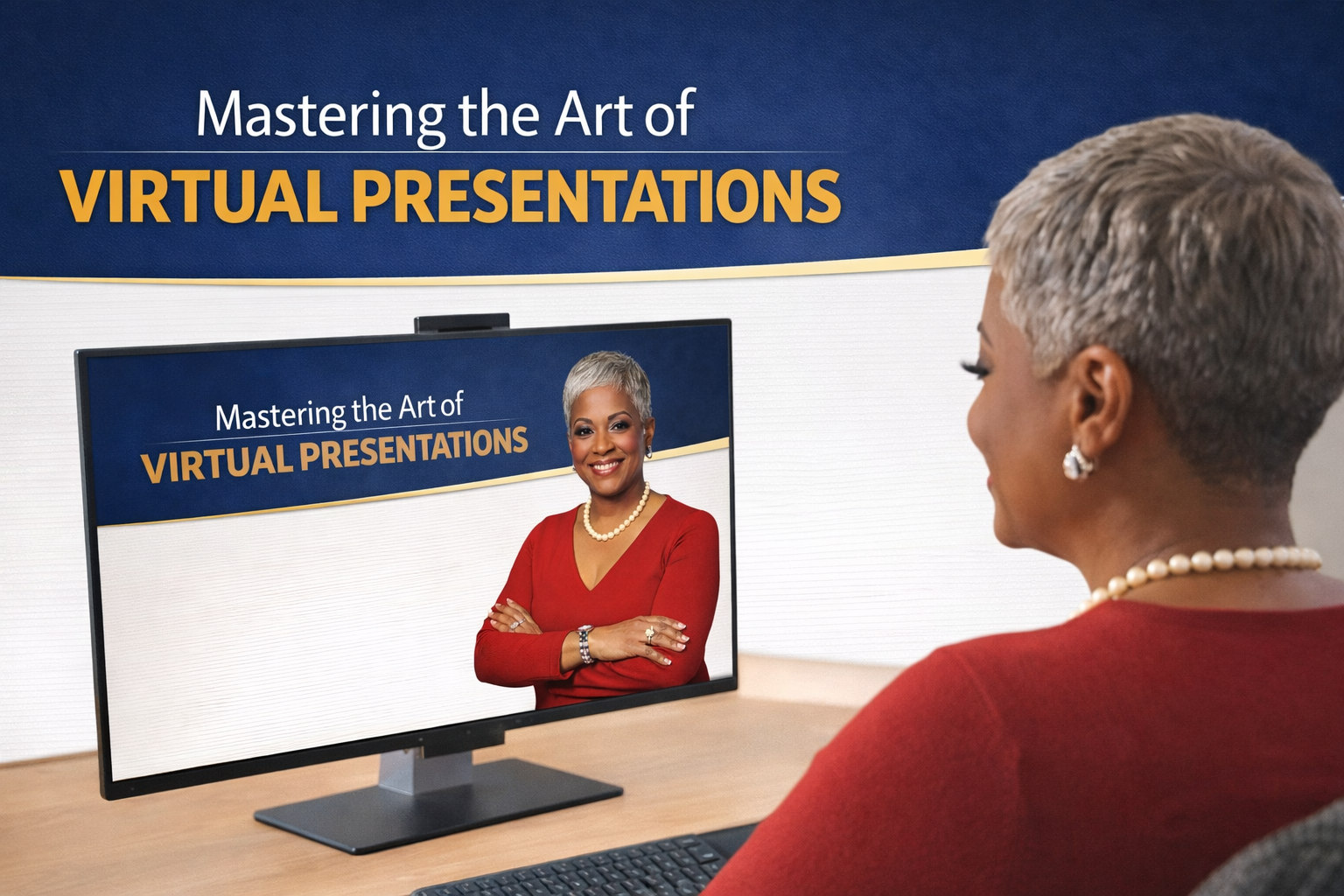
In early 2020, I was part of an organization planning a major conference for more than 1,000 attendees in Philadelphia. Then COVID-19 hit—and like everyone else, we had to pivot fast.
Overnight, we went from a fully in-person experience to a completely virtual one.
As the National Technology Chair, I won’t sugarcoat it—it was stressful. But here’s the twist: not only did we pull it off, we became the go-to organization for virtual best practices.
That experience taught me something powerful: Virtual presenting isn’t just a “nice-to-have” skill—it’s a leadership differentiator.
And the professionals who master it? They stand out fast.
Here are the seven skills that will elevate your virtual presence immediately:
Nothing disrupts your credibility faster than fumbling with technology.
Your audience may forgive a glitch—but they won’t forget a lack of preparedness.
Know your platform. Test your audio, camera, and screen sharing. Have a backup plan ready.
Confidence starts before you ever say a word.
Here’s the truth: virtual audiences disengage faster.
So you have to bring more energy—not less.
Use storytelling. Ask questions. Incorporate polls or visuals. Shift your tone and pace.
Your job isn’t just to present—it’s to hold attention.
In a virtual setting, clarity is everything.
You don’t have the luxury of physical presence to reinforce your message—so your words, tone, and pacing must do the heavy lifting.
Slow down. Be intentional. Use visuals to anchor your key points.
If your message isn’t clear, it won’t land.
One of the biggest challenges? You’re often speaking into a screen with little feedback.
But strong communicators don’t wait for engagement—they create it.
Call people by name. Invite input. Build in moments for interaction.
Connection doesn’t happen by accident—it’s designed.
Virtual fatigue is real.
If your presentation drags, you lose your audience—quickly.
Rehearse. Tighten your message. Leave space for dialogue.
Strong presenters don’t just deliver content—they manage energy and time.
Something will go wrong at some point. It always does.
The question is: how do you respond?
Stay calm. Adjust quickly. Keep moving.
Your composure in the moment says more than your slides ever will.
Most presenters log off and move on.
Strong communicators extend the conversation.
Follow up. Share resources. Answer questions.
This is how you build relationships—not just deliver presentations.
Virtual communication is no longer optional—it’s essential.
And when done well, it doesn’t just inform…
It positions you.
It shows your leadership.
It builds your credibility.
And it amplifies your voice—far beyond the screen.
So the next time you log on to present, remember:
You’re not just showing slides—you’re showing your value.
In early 2020, I was part of an organization planning a major conference for more than 1,000 attendees in Philadelphia. Then COVID-19 hit—and like everyone else, we had to pivot fast.
Overnight, we went from a fully in-person experience to a completely virtual one.
As the National Technology Chair, I won’t sugarcoat it—it was stressful. But here’s the twist: not only did we pull it off, we became the go-to organization for virtual best practices.
That experience taught me something powerful: Virtual presenting isn’t just a “nice-to-have” skill—it’s a leadership differentiator.
And the professionals who master it? They stand out fast.
Here are the seven skills that will elevate your virtual presence immediately:
Nothing disrupts your credibility faster than fumbling with technology.
Your audience may forgive a glitch—but they won’t forget a lack of preparedness.
Know your platform. Test your audio, camera, and screen sharing. Have a backup plan ready.
Confidence starts before you ever say a word.
Here’s the truth: virtual audiences disengage faster.
So you have to bring more energy—not less.
Use storytelling. Ask questions. Incorporate polls or visuals. Shift your tone and pace.
Your job isn’t just to present—it’s to hold attention.
In a virtual setting, clarity is everything.
You don’t have the luxury of physical presence to reinforce your message—so your words, tone, and pacing must do the heavy lifting.
Slow down. Be intentional. Use visuals to anchor your key points.
If your message isn’t clear, it won’t land.
One of the biggest challenges? You’re often speaking into a screen with little feedback.
But strong communicators don’t wait for engagement—they create it.
Call people by name. Invite input. Build in moments for interaction.
Connection doesn’t happen by accident—it’s designed.
Virtual fatigue is real.
If your presentation drags, you lose your audience—quickly.
Rehearse. Tighten your message. Leave space for dialogue.
Strong presenters don’t just deliver content—they manage energy and time.
Something will go wrong at some point. It always does.
The question is: how do you respond?
Stay calm. Adjust quickly. Keep moving.
Your composure in the moment says more than your slides ever will.
Most presenters log off and move on.
Strong communicators extend the conversation.
Follow up. Share resources. Answer questions.
This is how you build relationships—not just deliver presentations.
Virtual communication is no longer optional—it’s essential.
And when done well, it doesn’t just inform…
It positions you.
It shows your leadership.
It builds your credibility.
And it amplifies your voice—far beyond the screen.
So the next time you log on to present, remember:
You’re not just showing slides—you’re showing your value.

Hi! I'm LaNella Hooper-Williams. Through my blog, my mission is to give you tips and practical tools that will help you build a powerful brand and accomplish your personal and professional dreams. You’ll learn strategies that help you manage your personal brand, get noticed and rewarded for your unique talents, and gain greater career focus.